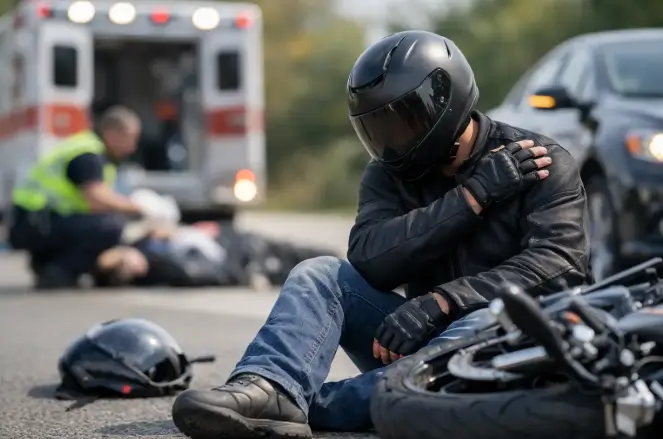
A motorcycle crash can happen in a split second, and the minutes that follow are often a blur. Your body is full of adrenaline, your bike may be lying in the road, and other drivers are stopping to stare. What you do next can affect your health, your insurance claim, and your ability to show what really happened.
The good news is that most of the important steps are simple, and many of them can be handled with the phone already in your pocket. Taking photos, saving messages, and keeping track of medical visits all help build a clear record. If your injuries are serious or the other driver’s insurance company starts pointing fingers, getting legal help after a Baltimore motorcycle crash can give you a clearer picture of your rights before you make any big decisions.
Get to Safety and Call 911
If you can move without making an injury worse, get yourself out of traffic and away from the road. Turn off the bike if you can do so safely, but do not try to lift it or push it if you are hurt. Your safety matters more than the motorcycle.
Call 911 so police and medical responders come to the scene. A police report creates an official record of the time, place, drivers involved, and early statements from witnesses. While you wait, stay calm and avoid arguing about who caused the crash. Saying something like “I’m sorry” out of habit can later be twisted into an admission of fault.
Get Medical Care Even If You Feel Fine
Adrenaline can hide pain for hours, and injuries like concussions or back and neck damage do not always show up right away. Seeing a doctor the same day protects your health and creates records that connect your injuries to the crash. Keep every follow-up appointment, since insurance companies often point to gaps in treatment to argue that an injury was not serious.
Use Your Phone to Capture Evidence
Your smartphone is one of the best tools you have after a crash. If you are able, take photos of your motorcycle, the other vehicle, skid marks, debris, traffic signals, road conditions, and any visible injuries. Take both wide shots that show the whole scene and close-ups that show damage. A slow video walk-around of the area can capture details you might miss in still photos.
Get names and phone numbers from anyone who saw what happened. If you are too shaken to write things down, record a quick voice memo describing what you remember while it is still fresh. If you ride with a helmet camera or the other driver has a dashcam, ask for that footage right away. Many cameras record on a loop and erase older video within hours, so save a copy and back it up to cloud storage as soon as you can.
Protect Your Digital Trail
Modern devices keep track of more than most people realize. Some phones and smartwatches have crash detection features that log the exact time of impact. Ride-tracking and GPS apps may store your route and speed, which can help answer claims that you were going too fast.
Do not delete texts, emails, or voicemails from the other driver or any insurance company. Take screenshots and store them in one folder. It is also wise to stay off social media while your claim is open. Insurance adjusters do look at public profiles, and a single photo of you smiling at a family cookout can be used to suggest you are not really hurt.
Understand Why Riders Face Extra Scrutiny
Motorcyclists often face an unfair assumption that they were speeding or riding carelessly, even when a car driver caused the crash. The real risks show why solid evidence matters so much. According to the National Highway Traffic Safety Administration, 6,228 motorcyclists were killed in traffic crashes in 2024, which was 16% of all traffic deaths that year. NHTSA also notes that most multi-vehicle motorcycle crashes happen because other drivers simply did not see the rider.
Riding in Baltimore Comes With Its Own Risks
Baltimore offers riders a little bit of everything, and that variety brings its own hazards. Highways like the Baltimore Beltway, I-95, and the Jones Falls Expressway carry heavy, fast traffic and frequent lane changes. Downtown and around the Inner Harbor, riders deal with tight intersections, delivery trucks, and drivers looking for parking. In older neighborhoods such as Fells Point and Canton, narrow streets, brick and cobblestone surfaces, and car doors opening along parked rows can catch a rider off guard. Add potholes, steel road plates in work zones, and light rail tracks, and it is easy to see why paying close attention to road conditions after a crash is important.
Know the Maryland Rules That Affect Your Claim
Maryland requires all riders and passengers to wear an approved helmet, and lane splitting is not allowed. Maryland also follows a strict rule called contributory negligence. In general, this rule can block an injured person from recovering money if they are found even slightly at fault, which is why insurers often work hard to place some of the blame on the rider.
Timing matters too. Maryland generally gives people three years from the date of a crash to file a lawsuit. Shorter notice deadlines can apply if a government agency may share responsibility, such as when a road defect played a role. Waiting too long can mean losing the right to file at all.
Be Careful When the Insurance Company Calls
An adjuster for the other driver may call within a day or two, sounding friendly and asking for a recorded statement or offering a quick settlement. You do not have to give a statement right away, and an early offer usually comes before anyone knows the full cost of your injuries. Keep a log of every call, along with your medical bills, missed work, and repair estimates, because once you accept a settlement you usually cannot ask for more later.
See also: Who Is Responsible When You Get Hurt in a Bus Accident?
Frequently Asked Questions
Can I still recover money if I was not wearing a helmet?
Maryland requires riders to wear helmets, but state law generally limits using a rider’s helmet choice to reduce their recovery. What the other driver did is still the main question when deciding who caused the crash.
What if the driver who hit me has little or no insurance?
Your own uninsured or underinsured motorist coverage may help pay for your losses. It is worth reviewing every policy that could apply, including your own.
How soon should I talk to a lawyer?
Sooner is usually better, ideally before you speak with the other driver’s insurance company. Video footage, skid marks, and witness memories can disappear within days.
Final Thoughts
A motorcycle crash can leave you sore, stressed, and unsure of what comes next. Getting to safety, seeing a doctor, and using your phone to capture evidence are the steps that protect you most in the early days.
From there, staying organized and being careful with insurance companies can help you avoid costly mistakes. If your injuries are serious or fault is in dispute, talking with a motorcycle accident attorney can help you understand your options and protect your claim.