Choosing the right point-of-sale system can have a major impact on how efficiently a retail business operates. A Specialty Retail POS system is designed to handle the specific needs of specialty retailers, including detailed inventory management, customer data, promotions, reporting, and flexible checkout options. Traditional POS systems, on the other hand, are generally built around basic transaction processing. Understanding the difference between these two solutions can help retailers choose technology that supports both their current operations and future growth.
1. Different Approaches to Retail Management
The biggest difference between specialty retail POS and traditional POS systems is their approach to managing a retail business.
Traditional POS systems primarily focus on processing sales. They allow employees to scan products, accept payments, print receipts, and complete basic returns or exchanges. While these functions are essential, they may not be enough for retailers that manage large or specialized product catalogs.
Specialty retail POS systems are designed with a broader view of retail operations. In addition to processing transactions, they can support inventory management, employee management, customer engagement, reporting, promotions, and other functions that specialty stores commonly require.
This makes specialty POS technology particularly useful for businesses with unique products, complex inventory requirements, or specialized customer experiences.
2. Inventory Management
Inventory management is one of the most important differences between the two types of systems.
A traditional POS may provide basic inventory counts. However, specialty retailers often need to track products using multiple characteristics, such as size, color, style, brand, category, SKU, or product variation.
A specialty retail POS can provide more detailed inventory information and help retailers understand what is selling, what is sitting on shelves, and when products need to be reordered.
For example, a clothing boutique may need to track the same shirt across several sizes and colors. A basic POS might record these products individually, while a more specialized system can organize product variations more efficiently.
Better inventory visibility can help reduce stockouts, prevent over-ordering, and make purchasing decisions easier.
3. Reporting and Business Insights
Traditional POS systems often provide basic sales reports, such as daily revenue and transaction totals.
These reports can be useful, but specialty retailers frequently need deeper insights into their businesses.
A specialty retail POS can provide more detailed reporting related to product performance, sales trends, inventory movement, employee performance, and customer purchasing behavior.
For example, retailers can use sales data to identify their best-selling products and determine which items may require additional promotional attention.
Instead of simply knowing how much the store sold, business owners can gain a clearer understanding of what sold, when it sold, and how different products or departments performed.
These insights can support better purchasing, staffing, marketing, and inventory decisions.
4. Customer Management
Customer relationships are particularly important for specialty retailers because many stores compete through personalized service and product expertise.
Traditional POS systems may capture basic customer information, but their customer management capabilities can be limited.
Specialty retail POS systems can provide tools that help retailers maintain customer profiles, track purchasing history, manage loyalty programs, and create more personalized promotions.
For example, if a customer frequently purchases products from a particular category, the retailer may be able to use purchase history to create more relevant offers.
This can encourage repeat purchases and help turn occasional shoppers into loyal customers.
5. Promotions and Discounts
Specialty retailers frequently run promotions, seasonal sales, loyalty discounts, clearance events, and product-specific offers.
Managing these promotions manually can create unnecessary work for employees and increase the risk of pricing errors.
Traditional POS systems may support simple discounts, but specialty retail POS solutions can offer more flexible promotional capabilities.
Retailers may be able to create rules around specific products, categories, customer groups, quantities, or promotional periods.
This is particularly useful for stores that frequently change their promotions or offer different discounts to different customer segments.
6. Checkout Flexibility
The checkout experience can have a direct impact on customer satisfaction.
Traditional POS systems are generally designed around a fixed checkout counter. While this works for many businesses, specialty retailers may benefit from additional flexibility.
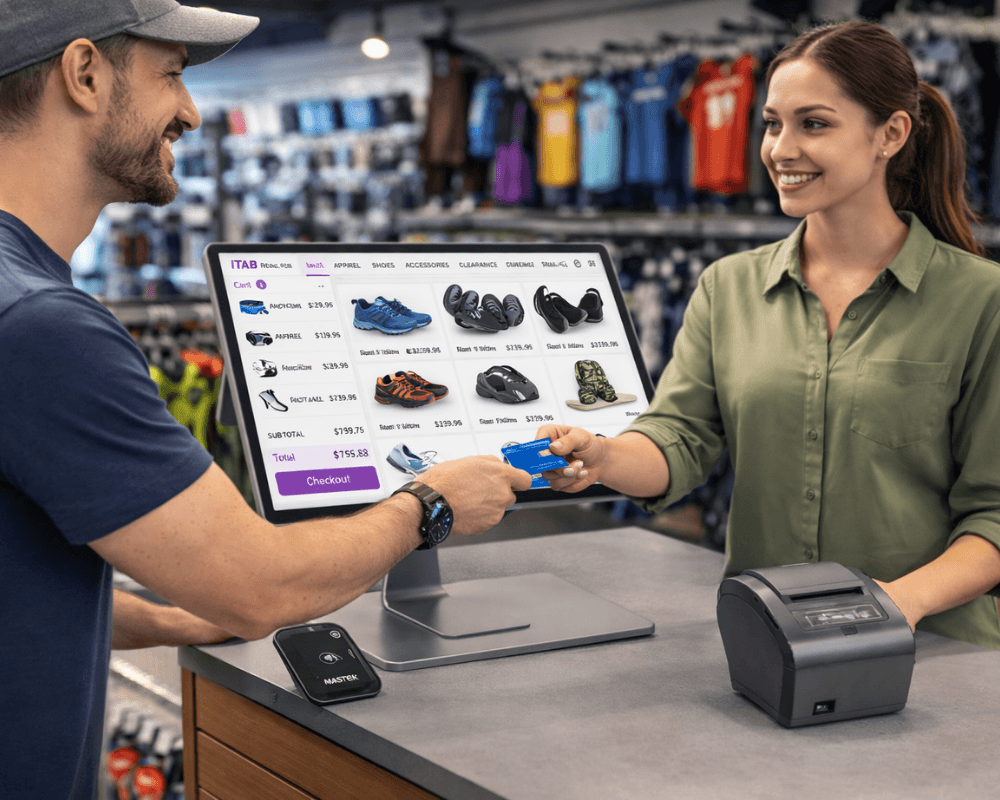
Modern specialty retail POS systems can support different checkout environments depending on the technology and configuration being used. Retailers may be able to serve customers more efficiently during busy periods, events, or high-traffic shopping days.
A flexible checkout process can also help reduce waiting times and improve the overall shopping experience.
7. Employee Management
Managing employees is another area where specialty retail POS systems can offer additional capabilities.
Traditional POS systems may provide basic user accounts or cashier permissions. Specialty retail solutions can go further by helping businesses monitor employee activity, sales performance, register activity, and other operational metrics.
This information can help managers understand employee performance and identify areas where additional training may be beneficial.
For businesses with multiple employees or locations, centralized employee management can also make day-to-day administration easier.
8. Multi-Location Retail
A traditional POS may work well for a single small store, but growing retailers often need more centralized management.
Specialty retail POS systems can be better suited to businesses operating multiple locations because they can provide centralized access to important business information.
Instead of manually collecting reports from every store, management can potentially monitor sales, inventory, and other key information from a central system.
This can make expansion easier and give business owners greater visibility across their operations.
9. Integrations With Other Business Tools
Retail businesses rarely operate using a POS system alone.
They may also rely on accounting software, e-commerce platforms, inventory tools, payment processors, customer loyalty programs, and other business applications.
Traditional POS systems may have limited integration options, particularly older systems.
Modern specialty retail POS solutions are generally built with integrations and connected workflows in mind. Connecting different systems can reduce duplicate data entry and help retailers create a more unified technology environment.
For example, integrating POS and inventory management can help ensure that sales information is reflected in available inventory.
See also: Ai-driven security tech: the future of safety and efficiency
10. Scalability
Another important consideration is how well a POS system can grow alongside a business.
A traditional POS may be sufficient for a small retailer with straightforward needs. However, as the business grows, its requirements may become more complicated.
New products, additional employees, multiple locations, online sales, loyalty programs, and more detailed reporting can all create additional technology requirements.
A specialty retail POS system can provide a more comprehensive foundation for businesses that expect their operations to become more sophisticated.
Choosing scalable technology can also help retailers avoid replacing their POS system every time the business reaches a new stage of growth.
11. Cost vs. Value
At first glance, a traditional POS may appear to be the more affordable option. However, retailers should consider the total value a system provides rather than looking only at the initial cost.
A basic POS may have a lower upfront price but require retailers to purchase additional software for inventory, reporting, loyalty programs, or other functions.
A specialty retail POS may provide more functionality within a unified system.
Retailers should evaluate factors such as software costs, hardware, payment processing, integrations, support, training, maintenance, and potential productivity improvements when comparing solutions.
The right system should provide features that solve real operational problems without adding unnecessary complexity.
Specialty Retail POS vs. Traditional POS: Which Is Better?
There is no universal answer because the right POS depends on the type and size of the business.
A traditional POS may be appropriate for a small retailer that only needs basic transaction processing and straightforward inventory tracking.
However, specialty retailers with complex product catalogs, customer loyalty programs, detailed reporting requirements, multiple locations, or more sophisticated inventory needs may benefit from a specialty retail POS.
The key is to consider where the business is today and where it plans to go in the future.
A POS system should do more than process payments. It should help retailers understand their business, manage inventory efficiently, improve customer experiences, and make informed decisions.
Final Thoughts
The difference between specialty retail POS and traditional POS ultimately comes down to functionality, flexibility, and the specific needs of the retailer. Traditional POS systems can provide the essential tools needed to process transactions, while specialty retail POS solutions can offer a broader set of capabilities designed around modern retail operations.
For specialty retailers, investing in a system that combines checkout, inventory management, reporting, customer management, promotions, and other retail functions can create a more efficient operation. Before choosing a solution, retailers should carefully evaluate their product catalog, sales channels, inventory requirements, customer experience goals, and plans for growth.
The right POS system is not simply a tool for completing transactions. It can become an important part of the overall retail strategy, helping businesses operate more efficiently and create better experiences for their customers.