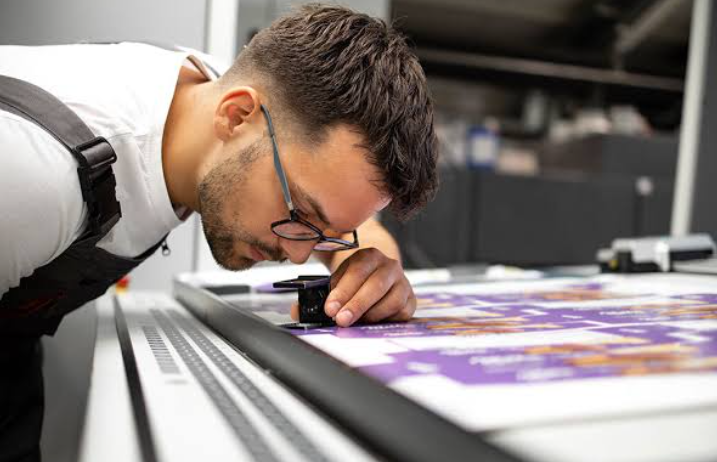
Maintaining consistent quality is one of the biggest challenges in modern print manufacturing. Customers expect every package, label, film, and printed product to meet the same visual and production standards from the beginning of an order to the end.
As printing equipment becomes faster, traditional quality-control methods can become difficult to maintain on their own. Manual sampling can identify certain problems, but it does not provide continuous visibility across the entire production process.
A comprehensive automated approach can help manufacturers monitor production more consistently. By combining cameras, image-processing technology, software, and operator oversight, modern inspection solutions can identify potential problems while material is still being produced.
Why Complete Inspection Matters
A printing line can produce a substantial amount of material in a relatively short period. If a defect begins developing between manual inspection points, the affected material may continue to increase before anyone notices the problem.
This is one of the main reasons manufacturers consider complete inspection approaches.
Instead of examining only selected samples, automated inspection can monitor the production material continuously. This provides quality teams with greater visibility and allows potential defects to be identified closer to the point where they occur.
Moving Beyond Sampling
Sampling remains useful for many quality-control processes, but it has an inherent limitation: only selected portions of production are examined.
Imagine that an operator checks a sample and finds no problems. A short time later, a printing unit develops an issue. If the next manual check takes place several minutes later, a significant amount of material may already be affected.
Continuous inspection provides another layer of protection by observing production throughout the run.
The goal is not simply to increase the number of inspections. It is to improve the visibility of the complete production process.
How Automated Inspection Works
A typical automated setup uses cameras positioned along the production line.
As material moves through the inspection area, cameras capture images continuously. Specialized software processes these images and evaluates them against an approved reference or predefined inspection criteria.
When a significant difference is detected, the system can alert the operator.
A general workflow includes:
- Material moves through the inspection area.
- Cameras capture images continuously.
- Controlled lighting supports consistent image quality.
- Software analyzes the captured information.
- Potential defects are identified.
- Relevant alerts are presented to operators.
- Production personnel investigate and respond.
The exact configuration depends on the printing process, material, production speed, and inspection requirements.
Types of Problems That Can Be Detected
Different applications require different inspection criteria, but automated visual inspection can help identify many common problems.
Missing Print
Incomplete graphics, text, or other printed elements can affect the appearance and usability of the finished product.
Spots and Streaks
Unwanted marks can result from ink, contamination, material handling, or equipment-related issues.
Registration Problems
Multicolor printing requires accurate alignment. Registration differences can become especially noticeable when several colors or layers must line up precisely.
Color Variation
Changes in production conditions can sometimes result in unwanted differences in color or appearance.
Surface Defects
Scratches, marks, contamination, and other imperfections may affect products where surface quality is important.
The actual detection capability depends on the inspection equipment, software, material, and configuration.
The Importance of Early Detection
One of the most valuable features of continuous inspection is early awareness.
If a problem is detected shortly after it starts, operators have an opportunity to investigate the cause before a larger quantity of material is affected.
For example, a repeated streak may indicate an issue that requires attention within the printing or material-handling process. An early alert can encourage the production team to investigate before the issue becomes more widespread.
Early detection does not guarantee that defects will never occur, but it can reduce the amount of time that a problem remains unnoticed.
Reducing Production Waste
Material waste can have a direct impact on manufacturing costs.
When defective material continues through a high-speed production line, the quantity requiring disposal or rework can grow quickly.
Automated monitoring can help shorten the time between defect occurrence and detection. This may allow operators to address production issues earlier and limit the amount of affected material.
Waste reduction can also improve the use of ink, energy, machine time, labor, and other production resources.
Improving Production Consistency
Consistency is especially important for branded products.
Packaging, labels, and printed materials often need to maintain a similar appearance across large production orders. Customers may notice even relatively small differences in graphics, registration, or surface appearance.
Continuous monitoring can help manufacturers maintain greater awareness of these variations throughout the production run.
Quality teams can also use inspection information to investigate recurring issues and improve production procedures.
The Role of Cameras
Cameras are a central component of an automated inspection setup.
The appropriate configuration depends on factors such as:
- Production speed
- Material width
- Inspection area
- Required image detail
- Material characteristics
- Expected defect size
Camera placement also needs to be carefully considered. The inspection system should maintain a reliable view of the material as it moves through production.
The camera should not be evaluated independently. Imaging, lighting, software, and production conditions all work together to determine inspection performance.
Why Lighting Is Important
Lighting can have a significant effect on automated visual analysis.
If lighting changes across the inspection area, the camera may capture unwanted differences that are unrelated to actual defects.
Glossy and reflective materials can be particularly challenging because glare may alter how certain areas appear.
A controlled lighting arrangement can help provide consistent images and make it easier for software to distinguish genuine production problems from environmental variations.
Combining Automation With Human Expertise
Automated inspection provides continuous monitoring, but human operators remain an important part of quality control.
When an alert is generated, an operator may need to inspect the material, investigate equipment conditions, or determine whether corrective action is necessary.
Human knowledge is particularly useful when evaluating unusual situations or determining whether a variation falls within acceptable production tolerances.
The most effective approach is often a combination of automated observation and human decision-making.
Integrating Inspection Into Production
A quality-control system should fit naturally into the manufacturing workflow.
Physical installation needs to consider the available space, material movement, camera positions, lighting, and operator access.
The software interface should also be straightforward enough for operators to understand inspection alerts quickly.
A properly integrated solution can provide quality information without unnecessarily interrupting production.
Manufacturers interested in comprehensive monitoring can explore 100% inspection systems as part of a broader quality-control strategy for print and surface inspection.
Making Use of Inspection Data
Inspection technology can provide more than immediate alerts.
When inspection events are recorded over time, manufacturers may be able to identify recurring patterns. A particular defect may occur repeatedly under specific production conditions.
This information can support investigations into machine settings, maintenance requirements, material handling, or other process factors.
Using data in this way can turn quality control into a continuous improvement process.
Operator Training
Operators should receive appropriate training before an automated inspection system becomes part of regular production.
Training can cover:
- Understanding inspection alerts
- Reviewing potential defects
- Checking production conditions
- Responding to recurring problems
- Adjusting approved inspection parameters when appropriate
- Reporting system issues
Good training helps ensure that operators use the technology effectively rather than treating every alert as an automatic reason to stop production.
Maintenance and Calibration
Inspection performance can change if equipment is not maintained correctly.
Cameras should remain properly positioned, lighting should remain stable, and inspection settings should be reviewed when materials or production conditions change.
New product designs may also require updated references or inspection parameters.
Routine maintenance and calibration can help maintain reliable inspection performance over time.
Planning a Complete Quality Strategy
Manufacturers should view automated inspection as one part of a broader quality-management process.
A strong strategy may include:
- Clear quality standards
- Automated visual monitoring
- Manual verification where appropriate
- Operator training
- Defect documentation
- Preventive maintenance
- Data analysis
- Continuous process improvement
When these elements work together, manufacturers can create a more reliable approach to maintaining product consistency.
Frequently Asked Questions
1. What does complete inspection mean in print manufacturing?
Complete inspection generally means monitoring the entire relevant production material rather than relying exclusively on selected samples. Automated cameras and software can provide continuous visibility while the material is moving through production.
2. Can automated inspection reduce waste?
It can help reduce waste by identifying potential defects earlier. Earlier detection gives production teams more opportunity to investigate and correct problems before a larger quantity of material is affected.
3. Is human inspection still necessary?
Human expertise remains important. Automated systems can continuously monitor and identify potential issues, while operators interpret alerts, investigate causes, and make production decisions.
Conclusion
Modern printing operations require quality-control methods that can keep pace with increasingly fast and complex production processes. Relying only on periodic samples may leave gaps in visibility, particularly when defects can develop rapidly.
Automated inspection provides a more comprehensive approach by continuously monitoring production material and identifying potential differences as they occur. This can support earlier defect detection, improved consistency, reduced waste, and better production awareness.
The strongest results come from combining appropriate technology with controlled imaging conditions, reliable software, trained operators, and regular maintenance. With a carefully planned implementation, complete inspection can become an important part of a modern print-quality strategy and help manufacturers deliver more consistent finished products.